7 Common Mistakes People Make When Stretching for Back Pain
Stretching is one of the first things people try when their back starts grumbling, and that instinct is sound. Gentle movement eases stiffness, settles irritated muscles and reminds you that your spine is built to move. But good intentions don't always make for good stretching. A few common habits — bouncing into a stretch, chasing a bigger range of motion, holding your breath — can leave your back feeling worse than when you started.
Here are the errors that come up most often, and the swaps that make stretching genuinely useful.
Bouncing, jiggling or pumping at the end of a stretch feels productive. It isn't. A bouncy movement triggers what's known as the stretch reflex: the muscle tightens to protect itself from what it reads as a sudden pull. You end up working against your own nervous system, and the muscle you were trying to lengthen is now doing more work than before.
What to do instead: ease into the position slowly, stop where you feel a mild pull, and stay still. Aim to hold for around 20 to 30 seconds while you breathe. If you prefer movement, use slow, controlled motion — a gentle cat-cow, a seated hip shift — rather than anything springy.
"No pain, no gain" is poor advice for a sore back. There is a clear difference between a stretch and a strain. A useful stretch feels like a broad, mild pull that you could hold a conversation through. Pain is sharper, more local, and usually makes you tense up.
Back off to roughly 70 to 80 per cent of what you can tolerate. If your pain travels down a leg, or comes with numbness or weakness, don't try to stretch it out — speak to your GP or a physiotherapist first.
It's easy to stop breathing when you're concentrating, and it works against you. Holding your breath raises tension throughout the body, which is the opposite of what you want. Long, slow exhales help muscles let go and signal to your nervous system that this position is safe.
Try this: breathe in through your nose for a count of three and out through your mouth for a count of five. On each exhale, see if you can soften a fraction deeper into the stretch — not by pushing, just by letting go.
Muscles and connective tissue respond better to a stretch when they're warm. Diving straight into a deep hamstring stretch after three hours at a desk is asking for a protective spasm.
Spend three to five minutes moving first: a brisk walk around the house, some marching on the spot, a few slow cat-cow cycles, or a set of shoulder rolls. You're not trying to work up a sweat — just to raise tissue temperature and wake up the joints.
The lower back rarely acts alone. If your hips are stiff and your glutes aren't doing their share, your back takes the load. Stretching the same sore spot over and over without addressing the neighbours is a common reason nothing changes.
Widen your routine to include:
Take the hamstrings slowly. If a hamstring stretch pulls in your lower back, bend the knee of the leg you're stretching and hinge from the hips rather than rounding through the spine.
Stretching feels good, and that's exactly why it becomes the only thing people do. But a back that has to cope with lifting, sitting, driving and carrying needs strength as well as length. Stretching a muscle that is too weak to do its job rarely solves anything.
Pair your stretching with a little strengthening work — glute bridges, bird dogs, dead bugs and slow hip hinges, for example. Walking counts too, and often does more for a stiff back than any single stretch.
A 30-second dash through four stretches once a week won't change much. Consistency beats intensity here. Five to ten minutes most days will do far more than a heroic 40-minute session every fortnight.
Timing matters a little as well. Some people find deep forward bending uncomfortable in the first hour after waking, when the spine is naturally a bit fuller of fluid. Others prefer to stretch in the evening. Experiment, and keep whatever feels good.
If you'd like something to follow, this sequence takes about eight minutes and covers the basics.
Keep one golden rule in mind: a stretch should feel like a gentle pull, never a sharp one, and you should be able to breathe and relax into it. If your back pain is severe, persistent, or comes with numbness, weakness or changes to bladder or bowel control, see a doctor rather than stretching your way through it. A physiotherapist can also assess what your back actually needs, which tends to be far more useful than a generic routine.
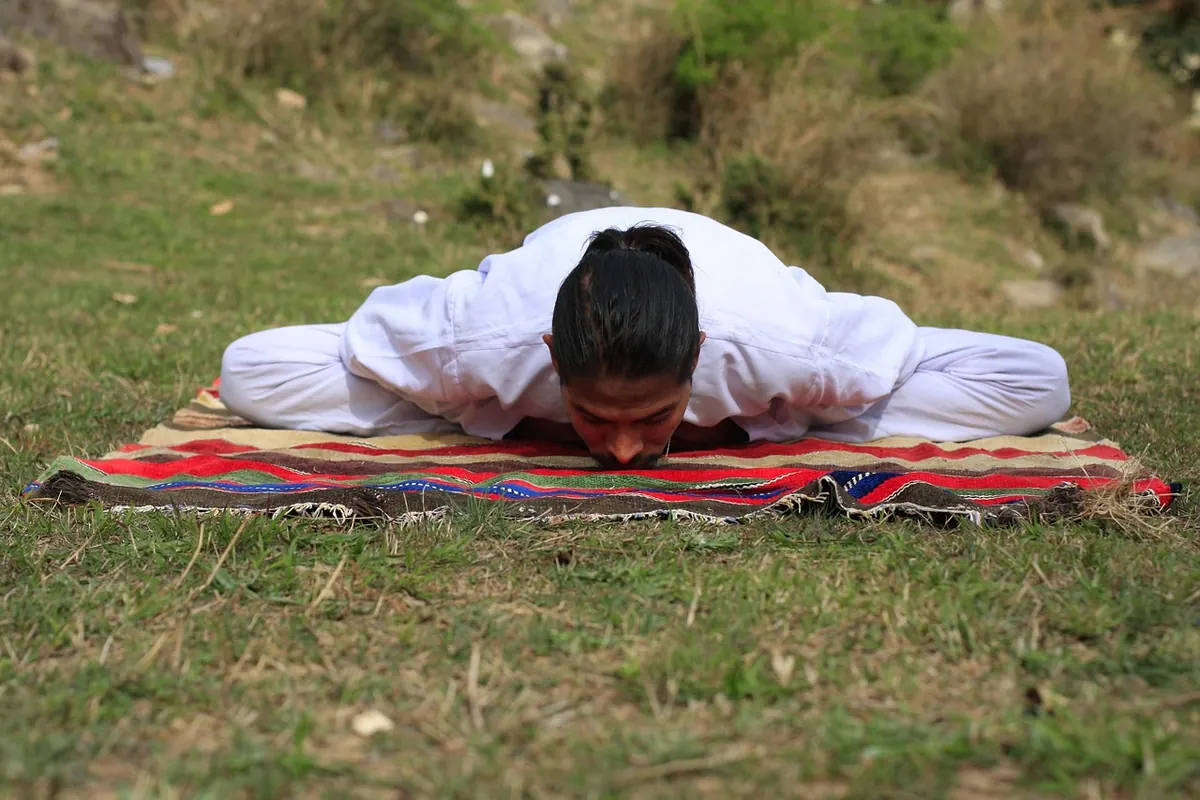
Photo: YogawithAmit / Pixabay
Previous Post
A Beginner's Guide to Walking for Back Pain Relief
Next Post
Winter Back Pain: Why Cold Weather Makes Your Spine Stiff and What Helps